

Buy Ethically Sourced Diamond Rings Online
Table of Contents
- What Ethically Sourced Diamonds Actually Mean
- Conflict-Free Diamond Rings: Standards and Verification
- How to Verify Diamond Origin and Supply Chain
- Natural vs Lab-Grown Diamond Jewelry: Trade-Offs and Ethics
- Ethical Diamond Sourcing Certifications to Look For
- The Real Cost: What You Pay for Handcrafted Ethical Diamonds
- Buying Ethically Sourced Rings Online: Protection and Aftercare
- Frequently Asked Questions
Last Updated: October 12, 2026
What Ethically Sourced Diamonds Actually Mean
Ethically sourced diamonds are gemstones extracted, processed, and sold through supply chains designed to minimize harm to workers, communities, and the environment, tracing origin, verifying fair treatment, and ensuring mining didn't devastate ecosystems or fund armed conflict.
It covers mined diamonds from regulated operations, lab-grown stones that eliminate mining, and recycled stones that need no new extraction.
What they are NOT: a marketing claim without documentation. Real ethical sourcing requires certification, traceability records, or third-party verification. At Certified Fine Jewelry, every stone includes its certification and appraisal.
Conflict-Free Diamond Rings: Standards and Verification
Conflict-free diamonds are verified to have NOT financed armed conflict or human rights abuses in their country of origin. The term emerged from the Kimberley Process, a 2003 international certification scheme created to keep "blood diamonds" out of mainstream markets (What Is The Kimberley Process?).
However, conflict-free does NOT mean ethically sourced in every dimension.
Verification matters. Look for:
- Kimberley Process Certification: Documents that a diamond did not finance armed conflict in its country of origin
- Third-party gemological reports: GIA, AGS, or other recognized labs that grade the stone and confirm its characteristics
- Origin documentation: Records showing where the diamond was mined and how it moved through the supply chain
When buying ethically sourced diamond rings online, request all available documentation. Reputable sellers like Certified Fine Jewelry provide certificates with every purchase.
How to Verify Diamond Origin and Supply Chain
Verifying diamond origin means asking the right questions and understanding what documentation actually proves:
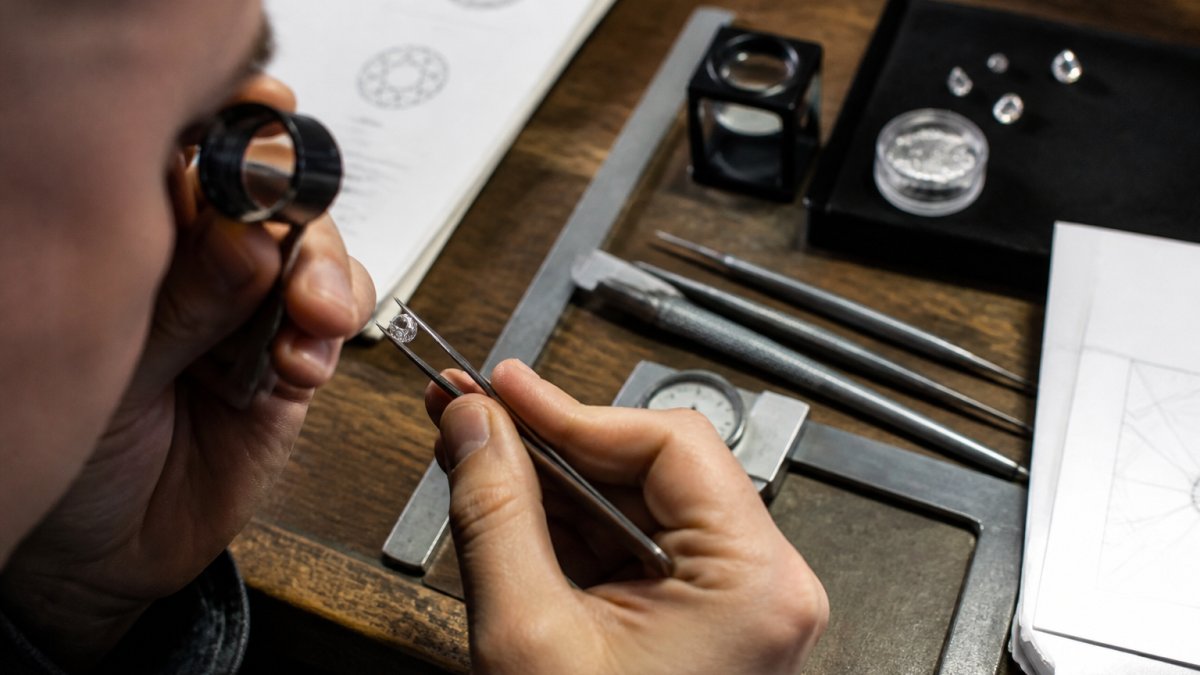
1. Request the gemological report. Issued by labs like the Gemological Institute of America (GIA), it describes the diamond's cut, color, clarity, carat weight, and treatments, confirming the stone is what the seller claims.
**2.
3. Verify the seller's reputation. Check independent reviews, certifications, and how long the business has been operating.
4. Understand the limits of online verification. You cannot inspect the stone in person, so request return policies and detailed photography or video before buying.
5. Cross-reference certifications. Verify the certifying lab is legitimate, the GIA, AGS (American Gem Society), and similar organizations maintain searchable databases to confirm a certificate's authenticity.
A verification checklist for online purchases:
- Gemological report provided (GIA, AGS, or equivalent)
- Origin documented (country, mine, or lab)
- Conflict-free or ethical sourcing certification included
Natural vs Lab-Grown Diamond Jewelry: Trade-Offs and Ethics
Natural and lab-grown diamonds involve trade-offs across cost, environmental impact, and personal preference. Both can be ethical; they differ in sourcing method.
Lab-grown diamonds are created in controlled environments using high-pressure, high-temperature (HPHT) or chemical vapor deposition (CVD) methods.
The trade-off: lab-grown diamonds have weaker resale value because supply is unlimited.
For ethical sourcing, lab-grown diamonds remove the mining question entirely, no extraction, habitat disruption, or conflict risk.
Ethical Diamond Sourcing Certifications to Look For
Certifications are the closest thing to proof in an online diamond purchase, but only if you understand what each verifies, what it leaves out, and how to confirm it is real.
Kimberley Process Certification (KPCS)
- What it verifies: That a rough diamond shipment did not finance rebel movements or armed conflict in the country of origin, per the 2003 UN-backed scheme now joined by roughly 80+ countries.
- What it does NOT verify: Labor conditions, wages, child labor, environmental impact, or the working conditions of artisanal miners. It is a conflict-financing filter, not an ethics certificate.
- How to authenticate: KP certificates travel with rough diamond shipments, not individual finished stones. Ask the seller whether the stone's provenance chain includes KP documentation and which country issued it.
Responsible Jewellery Council (RJC) Certification
- What it verifies: A company-level audit covering labor practices, human rights, environmental management, and supply-chain due diligence, with recurring third-party audits under the Code of Practices.
- What it does NOT verify: The specific origin of an individual diamond. RJC certifies the business, not the stone.
- How to authenticate: RJC maintains a public member directory. Search the seller's legal business name, not just the storefront brand, to confirm current certification status.
Gemological Institute of America (GIA) and American Gem Society (AGS) Reports
- What they verify: The stone's identity and quality, cut, color, clarity, carat weight, measurements, fluorescence, and treatments. GIA reports may also note origin for some stones.
- What they do NOT verify: Ethical sourcing, labor practices, or environmental standards. A GIA report tells you what the diamond is, not how it was produced.
- How to authenticate: Both GIA and AGS maintain online report-check databases. Enter the report number from the seller's listing and confirm the details match the stone being sold. A mismatched or unverifiable report number is a red flag.
Canadian Diamond Certification (e.g., CanadaMark)
- What it verifies: That a diamond was mined in Canada's Northwest Territories and tracked from mine to polished stone.
- What it does NOT verify: That the mining operator meets every possible labor or environmental standard, though Canadian operations are generally subject to stricter regulation than many competing jurisdictions.
- How to authenticate: CanadaMark stones carry a unique serial number that can be verified through the program's registry.
Lab-Grown Diamond Certifications (IGI, GIA, GCAL)
- What they verify: That the stone is lab-grown, the growth method (HPHT or CVD), and its quality characteristics. Some reports note post-growth treatments.
- What they do NOT verify: The energy source or labor conditions at the growing facility. "Lab-grown" is a production method, not an ethics claim.
- How to authenticate: Verify the report number directly with the issuing lab. Confirm the report explicitly states "laboratory-grown", a vague "created" or "synthetic" label without a lab report is not sufficient.
How to stack certifications into a verification chain
No single certification covers everything. A defensible sourcing claim usually layers at least two:
Natural Princess Cut Diamond Ring Size 6.5 14k Gold 0.35 TCW Certified $3,750 →
- Stone-level report (GIA, AGS, IGI, or GCAL), proves what the diamond is.
- Origin or conflict documentation (Kimberley Process, CanadaMark, or mine-specific traceability), proves where it came from.
- Company-level certification (RJC membership), proves the seller's supply-chain practices are audited.
If a seller offers only one of the three, ask which is missing and why. If they cannot explain the gap, treat the ethical claim as unverified.
At Certified Fine Jewelry, every stone ships with its gemological report and appraisal, and we can walk you through which certifications apply to a specific ring before you buy, so you know exactly which layer of verification you are getting.
The Real Cost: What You Pay for Handcrafted Ethical Diamonds
Two rings can carry the same headline price and still differ by hundreds or thousands of dollars in true cost.
1. The stone: price per comparable specification
- Natural vs lab-grown: Lab-grown stones of equivalent specification commonly price 30-40% below natural. That gap is real, but it reflects supply, not quality.
- Certification tier: A GIA- or AGS-graded stone typically carries a higher price than an uncertified or self-graded stone, because the grading is independent and verifiable.
2. The setting and metal
- Metal type: 14k gold, 18k gold, platinum, and palladium each carry different material costs and durability profiles. Platinum is denser and typically more expensive per gram than 14k gold.
- Setting style: A simple solitaire uses less metal and less bench time than a halo, pavé, or three-stone setting. The labor difference is real and shows up in the price.
- Recycled vs newly mined metal: Recycled precious metals avoid new extraction but are not always cheaper, refining and certification add cost.
3. Certification and appraisal
A gemological report and an independent appraisal are not free.
4. Sizing, resizing, and fit
- Initial sizing: Many online sellers size the ring once for free at purchase. Confirm this in writing.
- Later resizing: Resizing after the fact can run $50-$150+ depending on the metal and whether the ring has pavé or engraving. Rings with full-eternity settings may be difficult or impossible to resize without rebuilding.
- Sizing beads or inserts: Small adjustments for a loose fit may add a modest charge.
5. Warranty, repairs, and maintenance
- Warranty coverage: Ask what is covered, prong tightening, stone replacement, rhodium re-plating, and manufacturing defects are common categories, but coverage varies widely.
- Annual inspection: Many jewelers offer free annual inspections; others charge. Over a decade, this adds up.
- Repair turnaround: If the seller requires you to ship the ring back for repairs, factor in insured shipping both ways.
6. Shipping, insurance, and returns
- Insured shipping: Fine jewelry should ship insured and signature-required. Confirm who pays and whether international shipping is covered.
- Return window: Common windows range from 14 to 30 days. Shorter windows compress your decision time.
- Return shipping cost: Some sellers cover it; others deduct it from the refund. On a high-value ring, this can be significant.
7. Cost per year of use, the number that actually matters
Divide total cost (purchase + expected maintenance + any resizing) by expected years of wear.
A worked example
The Natural Princess Cut Diamond Ring at Certified Fine Jewelry is priced at $3,750.

Buying Ethically Sourced Rings Online: Protection and Aftercare
Buying fine jewelry online without seeing it in person requires confidence in the seller and protection mechanisms. Here's how to minimize risk.
Before purchase:
- Request detailed photos or video from multiple angles
- Ask about the return policy, timeframe, and return shipping costs
- Confirm the seller provides certification and documentation
Upon receipt:
- Inspect the ring immediately and compare it to the photos and description
- Verify the certification matches the ring and stone
- Check the metal weight, purity mark, and condition
Aftercare:
For resizing, repairs, or modifications, work with a jeweler experienced in fine jewelry. Certified Fine Jewelry can answer questions about your ring's care.
Online purchase protections:
- Credit card protection: Dispute charges if the ring doesn't match the description
- Seller guarantees: Reputable sellers offer satisfaction guarantees or return periods
- Shipping insurance: Ensure the ring is insured during transit
When buying ethically sourced diamond rings online from Certified Fine Jewelry, you receive a certificate of authenticity and appraisal, free priority shipping, and access to the team for questions about your purchase.
Buying an ethically sourced diamond ring is a significant purchase that deserves careful consideration.
Frequently Asked Questions
What does ethically sourced mean for a diamond ring?
Ethically sourced diamonds are mined or lab-grown using practices that minimize harm to workers and the environment, with transparent supply chains and fair labor standards. For mined diamonds, this means avoiding conflict zones and ensuring miners receive fair wages and safe working conditions. Certified Fine Jewelry specializes in ethically sourced diamonds with full documentation of origin and sourcing practices.
How can I verify where a diamond was sourced?
Request a certificate of authenticity and appraisal from the jeweler. Look for third-party certifications from organizations like the Gemological Institute of America (GIA), which grades diamonds according to international standards. Ask the jeweler directly about their supply chain, where the diamond originated, and what documentation they hold. Reputable sellers like Certified Fine Jewelry provide certificates and appraisals with every diamond, detailing stone specifications and origin traceability.
Are lab-grown diamonds more ethical than natural diamonds?
The choice depends on your priorities. Both are viable options when sourced with transparency and proper certification.
What certifications should I look for when buying a diamond ring online?
Look for GIA (Gemological Institute of America) certification, which is the industry standard for diamond grading. Additional certifications include Kimberley Process Certification for conflict-free status and certifications from organizations like the Responsible Jewellery Council for supply chain transparency. When buying online, ensure the seller provides a certificate of authenticity and appraisal. Certified Fine Jewelry certifies all diamonds according to GIA standards and includes full documentation with every purchase.