

Custom Fine Jewelry Design Process Explained
Last Updated: October 23, 2026
Quick Summary
The custom fine jewelry design process explained involves collaboration between you and a skilled jewelry designer to create a one-of-a-kind piece tailored to your personal style. The journey typically moves through consultation, design sketches and renderings, gemstone and metal selection, approval, fabrication, and final inspection before delivery.
- Custom jewelry typically takes several weeks to several months from initial consultation through final delivery.
- The design process includes hand sketches, CAD drawings, and 3D renderings before any metal is cast or stone is set.
- Fabrication involves casting, shaping, stone setting, polishing, and quality inspection to ensure meticulous craftsmanship.
- Ethical sourcing documentation and grading reports should accompany your gemstones from a reputable designer.
- Daily-wear pieces require strong settings and durable stones like diamonds and sapphires to resist scratching.
Table of Contents
- What Is Custom Fine Jewelry Design?
- Step 1: Prepare for Your Custom Jewelry Consultation
- Step 2: Meet With Your Jewelry Designer
- Step 3: Choosing Gemstones for Custom Jewelry
- Step 4: Design Sketches, CAD, and 3D Renderings
- Step 5: Selecting Precious Metals and Materials
- Step 6: Custom Jewelry Design Timeline and Craftsmanship
- Ownership, Revisions, and Aftercare
- Frequently Asked Questions
What Is Custom Fine Jewelry Design?
Custom fine jewelry design is the process of creating a one-of-a-kind piece tailored to your personal style, preferences, and life milestones. Unlike mass-produced jewelry, each piece is designed specifically for you and crafted by hand.
The custom fine jewelry design process explained involves collaboration between you and a skilled jewelry designer. You bring your vision, inspiration, and preferences; the designer brings technical expertise, knowledge of materials, and the ability to transform your ideas into wearable art.
The journey typically moves through several key stages:
- Consultation and concept development
- Design sketches and digital renderings
- Gemstone and metal selection
- Approval and refinement
- Fabrication and craftsmanship
- Final inspection and delivery
Step 1: Prepare for Your Custom Jewelry Consultation
Before you meet with a jewelry designer, preparation prevents miscommunication and speeds up the entire design process.
Gather Inspiration and Define Your Design Concept
Start by collecting images of jewelry styles you love from design portfolios, jewelry websites, and social media. Look beyond the finished piece and pay attention to:
- Band width and profile (thin, medium, bold)
- Stone settings (solitaire, halo, three-stone, vintage-inspired)
- Metal finishes (polished, matte, textured)
- Overall aesthetic (modern, classic, bohemian, art deco)
Your inspiration images don't need to be perfect matches. They simply show your designer the visual language you speak, whether that's vintage silhouettes or clean, contemporary lines.
Think about the occasion and type of jewelry you're commissioning. An engagement ring needs durability for daily wear; a special-occasion piece can be more delicate.
Know Your Budget and Timeline
Discuss pricing expectations before you start. Custom fine jewelry pricing depends on the gemstones you select, the precious metals involved, the complexity of the design, and fabrication time.
Timeline matters equally. Custom jewelry takes longer than ready-made pieces because each step, design, approval, sourcing, fabrication, and inspection, requires time. Be realistic about deadlines, especially for a specific event.
Document your preferences:
- Approximate budget range
- Target completion date
- Any hard deadlines (wedding, anniversary, milestone)
- Flexibility on timeline if needed
Step 2: Meet With Your Jewelry Designer
Your consultation is where vision becomes reality, and your chance to communicate directly with the person bringing your piece to life.
What Happens During the Consultation
A professional jewelry designer listens more than they talk. During your consultation, expect to discuss:
- Your inspiration images and design preferences
- The occasion and purpose of the piece
- Your lifestyle and how you'll wear the jewelry
- Your budget and timeline
- Any specific requirements or constraints
The designer may ask questions that seem unrelated to jewelry, about your daily routine or your style outside of jewelry, to understand not just what you want, but why.
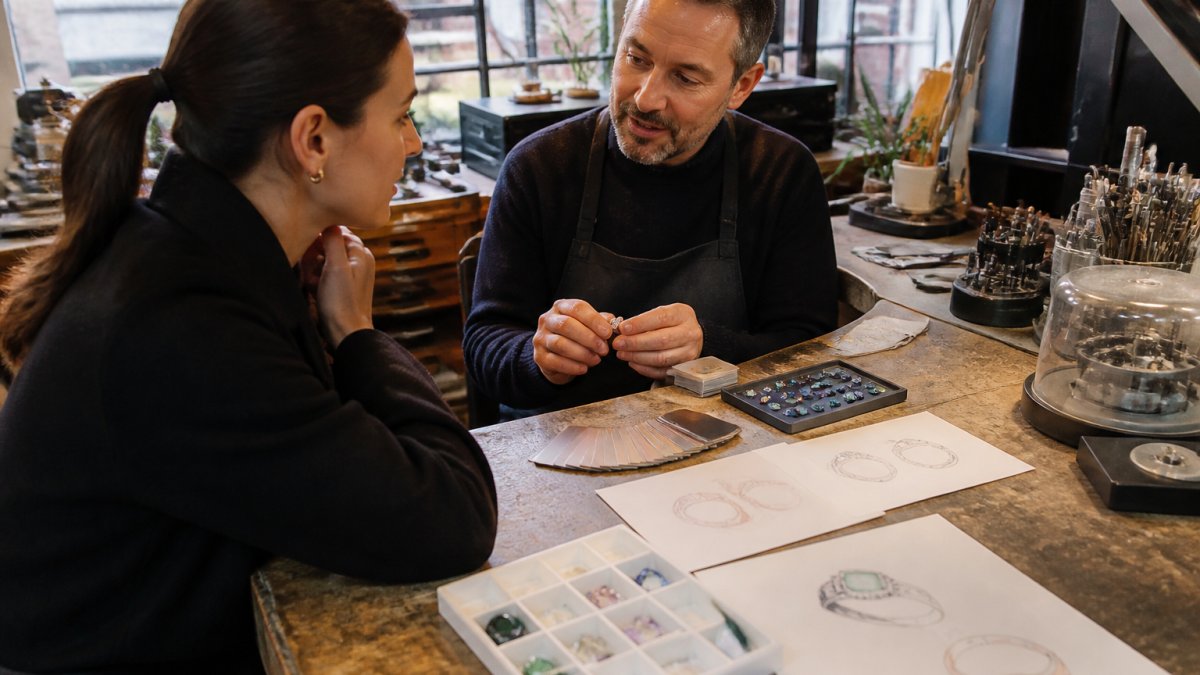
This is also when your designer explains how they work, hand sketches, CAD, or both, and the timeline for sketches, revisions, and approval.
Sharing Your Preferences and Personal Style
Be specific. Don't just say "I like vintage styles", explain whether it's the intricate metalwork, the romantic aesthetic, or the heirloom feel. This helps your designer align with your actual preferences, not their assumptions.
Discuss your personal style honestly, minimalist or bold, so your designer can create something you'll love wearing for years.
Talk about wearability and durability too. Daily wear rules out delicate settings, and softer gemstones scratch easily. Your designer can recommend settings and stones that match your lifestyle.
Step 3: Choosing Gemstones for Custom Jewelry
Selecting gemstones is one of the most important decisions in the custom fine jewelry design process explained, your choice affects appearance, durability, and value.
Selecting Your Center Stone
If your piece features a center stone, diamond, sapphire, ruby, or colored gem, consider these factors:
The Four Cs (for diamonds):
- Cut: how well the stone is shaped and faceted
- Color: the absence of color (colorless diamonds are graded D-Z)
- Clarity: the absence of inclusions or blemishes
- Carat weight: the stone's size and weight
For colored gemstones:
- Hue: the color itself
- Saturation: how vivid or muted the color appears
- Tone: how light or dark the color is
- Treatment: whether the stone has been heat-treated or otherwise enhanced
Your designer can explain how these affect appearance and price. A stone with slightly lower clarity but excellent color and cut may look more beautiful than a technically "better" stone that looks dull.
Understanding Gemstone Sourcing and Ethical Provenance
Where your gemstones come from matters, ethically and for the story your piece carries. Certified Fine Jewelry specializes in ethically sourced fine colored gems and diamonds.
Ask your designer about gemstone sourcing:
- Where was the stone mined?
- Does it have documentation of ethical sourcing?
- Has it been treated, and if so, how?
- What certifications or grading reports accompany it?
Ethical sourcing means the stone was mined responsibly, without funding conflict or harming communities. Knowing your stone's origin adds meaning to your piece.
Step 4: Design Sketches, CAD, and 3D Renderings
Once your designer understands your vision and gemstones are selected, the design work begins, transforming inspiration into drawings and digital models.
From Hand Sketches to Computer-Aided Design
Most designers start with hand sketches, fast, flexible drawings that capture your vision and let your designer explore multiple directions before committing to detailed work.
From there, your designer moves to computer-aided design (CAD), creating precise 3D models that show how the piece looks from every angle, how the gemstone sits in the setting, and how proportions work together.
Many designers also create 3D renderings, realistic images with lighting and materials applied, so you see your custom jewelry design as it will appear in real life.
The design process typically includes:
- Initial hand sketches (1-3 options)
- CAD drawings of your preferred direction
- 3D renderings for final visualization
- Revisions based on your feedback
Reviewing and Approving Your Design
Evaluate the design before any metal is cast or stone is set. Review the CAD and renderings carefully and ask:
- Does this match my vision?
- Do the proportions feel right?
- Is the stone setting secure and durable?
- Does the band width and profile suit my hand?
- Are there any details I'd like adjusted?
Request revisions if needed. This is the time to make changes, it's far easier and less expensive to adjust a digital design than to remake a physical piece. Your designer can modify dimensions, adjust the setting, refine details, or explore different options.
Once you approve the design, you're ready to move forward to fabrication.
Step 5: Selecting Precious Metals and Materials
The metal you choose affects your piece's appearance, durability, and maintenance requirements. Common precious metals for fine jewelry include:
Gold: Available in yellow, white, and rose gold. Yellow gold is classic and warm. White gold has a cool, contemporary look. Rose gold offers a romantic, vintage aesthetic. All gold is measured in karats, higher karat gold is purer but softer.
Platinum: More durable than gold and naturally white. Platinum is denser and heavier, giving pieces a substantial feel.
Silver: Less common for fine jewelry because it's softer and more prone to scratching and tarnishing.
Mixed metals: Some contemporary designs combine metals, perhaps a white gold band with rose gold accents. This approach adds visual interest and allows personalization.
Your designer will recommend metals based on your design, gemstones, and lifestyle. Platinum suits active lifestyles because it resists wear better.
Step 6: Custom Jewelry Design Timeline and Craftsmanship
Understanding the timeline helps you plan accordingly. The entire custom fine jewelry design process explained typically takes several weeks to several months, depending on complexity and current workload.
Typical timeline:
- Initial consultation: 1-2 weeks
- Design and approval: 2-4 weeks
- Gemstone sourcing (if needed): 1-3 weeks
- Fabrication and setting: 2-6 weeks
- Final inspection and finishing: 1-2 weeks
From Fabrication to Final Inspection
Once your design is approved and materials are sourced, fabrication begins. Your jeweler creates your piece by hand. At Certified Fine Jewelry, every piece is designed and made by hand, ensuring meticulous attention to detail.
Fabrication involves several steps:
- Casting: Pouring molten metal into a mold created from your design
- Shaping: Hand-finishing the cast metal to match design specifications
- Stone setting: Carefully securing your gemstone in its setting
- Polishing: Achieving the desired finish (polished, matte, or textured)
- Quality inspection: Checking for flaws, proper stone security, and overall quality
This final inspection ensures your custom jewelry meets the highest standards of craftsmanship.
Wearability, Durability, and Maintenance
A well-crafted custom piece should last a lifetime, or longer. Durability depends on design, materials, and how you wear your jewelry.
Daily-wear pieces need strong settings and durable stones. Softer gemstones like opal or pearl are beautiful but require more careful handling. Harder stones like diamonds and sapphires resist scratching better.
Maintenance tips:
- Clean your jewelry regularly with appropriate methods
- Avoid exposing delicate pieces to harsh chemicals or extreme temperatures
- Have settings checked periodically to ensure stones remain secure
- Store jewelry safely when not wearing it
Your designer can recommend specific care instructions based on your piece's materials and design.
Ownership, Revisions, and Aftercare
Once your custom piece is complete and delivered, you own it fully.
Revisions after delivery: If you want changes after receiving your piece, discuss this with your jeweler.
Warranty and insurance: Ask about warranties on craftsmanship. Reputable jewelers stand behind their work.
Resizing and repairs: Over time, you may need to resize your piece or repair wear.
Passing it forward: Custom fine jewelry often becomes an heirloom.
The custom fine jewelry design process explained is fundamentally about collaboration. You bring your vision, lifestyle, and preferences.
Frequently Asked Questions
What should I bring to a custom jewelry design consultation?
Bring inspiration images of jewelry styles you love, any heirloom pieces or gemstones you want to incorporate, your budget range, and a clear sense of the occasion the piece is for. Write down your preferences regarding metal type, stone size, and design style. If you have specific measurements or sizing needs, note those too. The more details you provide, the better your designer can capture your vision.
How long does the custom jewelry design timeline typically take?
From initial consultation to final delivery, custom fine jewelry typically takes several weeks to several months, depending on complexity and design revisions. Your designer will provide a detailed timeline with decision dependencies so you know exactly when each phase begins and ends.
Can I make changes to my custom jewelry design after I approve the sketches?
Yes, revisions are part of the process. Most designers include several rounds of design revisions before you approve the final CAD or 3D rendering. Once fabrication begins, major changes become costly and may delay delivery. Discuss revision policies during your initial consultation.
How do I know the gemstones in my custom piece are ethically sourced?
Reputable custom jewelry designers provide documentation and certifications for gemstones, particularly diamonds and colored stones. Ask for grading reports from recognized labs, conflict-free sourcing statements, and details about where stones come from. Certified Fine Jewelry specializes in ethically sourced fine colored gems and diamonds, ensuring transparency and responsible sourcing practices for every piece.
