

How to Assess Jewelry Durability Online
Table of Contents
- Why Durability Matters When Buying Fine Jewelry Online
- Best Metals for Everyday Jewelry
- Gemstone Durability Guide for Online Assessment
- Evaluating Setting and Construction Quality
- Jewelry Product Listing Checklist
- Questions to Ask When Buying Fine Jewelry Online
- How to Assess Durability When Photos or Specs Are Incomplete
- Frequently Asked Questions
Last Updated: October 16, 2026
Why Durability Matters When Buying Fine Jewelry Online
Buying fine jewelry online means you can't hold it, test the clasp, or feel the metal on your skin. That makes durability assessment harder, but not impossible, the right knowledge lets you spot quality from photos and product descriptions alone.
Fine jewelry is meant to last. A daily-worn ring faces constant stress, a necklace supports its own weight for years, and earrings endure tugging and snagging. If materials or construction can't handle real life, the piece fails.
At Certified Fine Jewelry, four generations of experience have taught us how to assess jewelry durability. Our handcrafted pieces are built to survive decades of wear.
Durability breaks into three parts: the materials themselves, since metals and stones have different strengths; construction quality, which determines whether a stone stays secure or a clasp fails; and how the piece has aged, since visible wear on estate and vintage jewelry tells you what to expect. Master these three areas and you can assess jewelry durability online with confidence.
Best Metals for Everyday Jewelry
Not all metals are equal. Some hold up to daily wear; others scratch, bend, or tarnish quickly. Choosing the right metal is your first line of defense.
Gold comes in different karats. 24-karat is pure but too soft for everyday wear. 18-karat (75% pure) is strong and substantial. 14-karat (58% pure) is more durable and the most common choice for fine jewelry. 10-karat is the US minimum for jewelry labeled "gold," but it's harder and less rich in color.
Platinum is heavier and stronger than gold, resists scratching better, and won't fade. The trade-off is cost. For a piece you'll wear every day, it's worth considering.

Sterling silver (92.5% pure) is affordable but tarnishes in air, needs regular cleaning, and can dent or bend if hit hard. It works for occasional wear; for everyday rings, it's riskier.
White gold is yellow gold mixed with other metals to look like platinum. Quality white gold is durable, but cheaper versions contain nickel, which some people react to. Look for "nickel-free" if you have sensitive skin.
Interpreting Metal Stamps and Purity Claims
Every legitimate fine jewelry piece carries a hallmark, a tiny stamp showing metal content. Learning to read these stamps protects you from misrepresented pieces.
Gold stamps show karat weight: 24K, 18K, 14K, or 10K. Platinum stamps typically read "Plat," "Pt," or "950" (which means 95% platinum). Sterling silver reads "925" or ".925."
Be cautious with "gold-plated" or "gold-filled", neither is solid gold. Plating is a thin gold layer over base metal that wears away; gold-filled has more gold but still isn't solid. For durability, choose solid metal whenever possible.
If a listing doesn't mention metal stamps or purity, ask the seller. Legitimate dealers provide this information; if they won't, that's a red flag.
Plating vs. Solid Metal
Solid metal means the entire piece is one metal or a consistent alloy. A solid 14K gold ring is 14K throughout. Solid metal lasts indefinitely.
Plated metal has a thin precious-metal coating over a cheaper base. The plating wears away with friction, the base metal shows through, and the original finish can't easily be replicated.
For online purchases, solid metal is your safest bet: it costs more upfront but eliminates plating failure. If you love a plated piece, know that it has a limited lifespan for daily wear.
Gemstone Durability Guide for Online Assessment
Gemstones vary wildly in durability. A diamond can take a hit. An opal can shatter from a bump. Knowing which stones suit everyday wear and which need protection is critical.
The Mohs hardness scale rates stone toughness from 1 (softest) to 10 (hardest). Diamond ranks 10. Sapphire and ruby rank 9. Emerald ranks 7.5 to 8. Opal ranks 5.5 to 6.5.

For everyday rings, aim for stones ranking 8 or higher on the Mohs scale. They resist scratching and regular contact; softer stones need careful handling and protection from daily wear.
Hardness, Toughness, and Stability
Hardness isn't toughness. A stone can be hard but brittle, it resists scratching yet breaks under pressure. Toughness is the ability to withstand impact without breaking.
Diamond is the hardest natural stone, though some are brittle depending on internal structure. Most are tough enough for any setting.
Sapphire and ruby (both corundum) rank 9 on hardness and are quite tough. They're excellent for engagement rings and daily-wear pieces.
Emerald is hard but naturally fractured and more brittle than sapphire. It needs careful handling and shouldn't be worn in rings subjected to impact.
Opal is soft and porous, absorbs moisture, and can crack if it dries out. Stunning, but better suited to earrings or pendants than rings.
Stability refers to how a stone reacts to heat, light, and chemicals, some fade in sunlight, others change color when heated. Research the specific stone type, and if a listing doesn't mention treatment or stability, ask.
Identifying Damage and Treatments from Photos
Photos reveal a lot if you know what to look for. Zoom in closely.
Look for chips or fractures along edges or facets, small lines or missing pieces. A chipped stone only gets worse with wear.
Check for cloudiness or inclusions. Some are normal; others signal weakness. If the stone looks murky or has visible internal cracks, durability is compromised.
Color uniformity matters. Uneven or artificially bright color may mean treatment or dye, and treated stones can fade over time. Legitimate sellers disclose treatments.
Surface condition reveals care history: minimal scratching means good maintenance, while heavy scratching suggests unprotected wear or rough cleaning.
For colored gemstones, ask the seller directly: Is this stone natural or lab-created? Has it been treated for color or clarity? These answers affect both durability and value.
Evaluating Setting and Construction Quality
A beautiful stone in a weak setting is a disaster waiting to happen. How the stone is held in place matters as much as the stone itself.
Tiffany & Co Estate Somerset Ring Size 8 Sterling Silver 10 mm TIF691 →
Prongs, Bezels, and Stone Security
The two most common settings are prong and bezel.
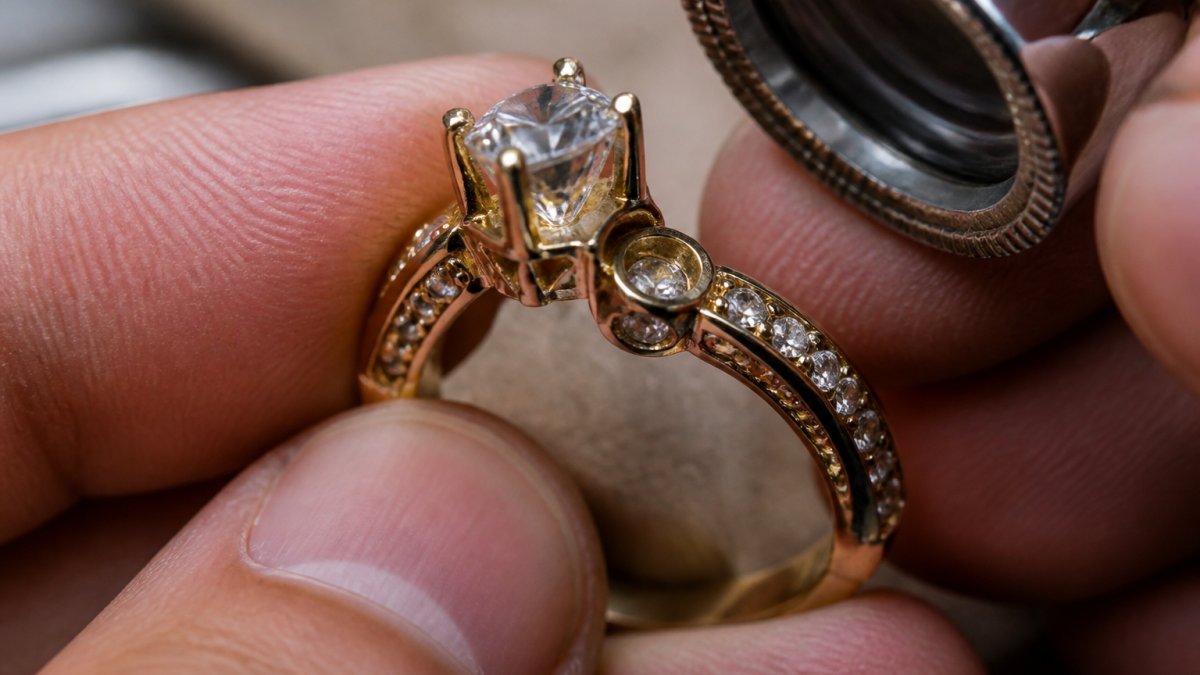
Prongs are thin metal fingers gripping the stone's edges, elegant and light-passing, but they can bend or break if hit hard. For durability, look for at least four sturdy, evenly spaced prongs on a center stone; six is better.
A bezel setting surrounds the stone's edge with a metal band, protecting it better than prongs and shielding it from impact. The trade-off: bezels hide part of the stone and can make it look smaller.
In photos, check how tightly the setting holds the stone. Visible daylight between prongs and stone means it's loose, and movement leads to damage.
Check metal thickness: thin metal bends easily, thick metal holds firm. For a daily-wear ring, the band should be at least 1.5 mm thick.
Check solder joints where metal pieces are joined. They should be smooth and even; rough solder signals poor craftsmanship and a weak point that can fail.
Wear and Repairs in Estate Pieces
Estate and vintage jewelry has history, visible if you know where to look.
Wear patterns show how the piece was used. Light wear on a ring's back suggests regular wear; heavy edge wear may mean prongs were resized repeatedly, leaving the setting thinner and less durable.
Polishing marks show how often the piece was refinished. A few are normal; excessive marks suggest repeated repairs that weaken the metal.
Patina is a thin oxidation layer on silver or gold. Natural patina is part of the piece's character, but deep tarnish or discoloration suggests poor maintenance and possible corrosion underneath.
For estate pieces, ask: Has it been professionally cleaned or restored? Any repairs? What's the condition of the prongs or setting? The answers tell you whether it's stable or needs work soon.
Jewelry Product Listing Checklist
Use this checklist for any piece you evaluate online.
| Assessment Area | What to Check | Red Flags |
|---|---|---|
| Metal | Karat stamp, purity claim, solid vs. plated | No hallmark, "gold-plated," unclear material |
| Stone | Hardness rating, treatment disclosure, visible damage | Soft stone in ring, no treatment info, chips visible |
| Setting | Prong/bezel type, metal thickness, solder quality | Loose stone, thin metal, rough joints |
| Condition | Wear pattern, patina, repair history | Heavy wear, deep tarnish, multiple repairs |
| Documentation | Certificate, appraisal, seller credentials | No paperwork, unverifiable claims |
Fill it out for every piece you consider. If more than two items raise concerns, pass or negotiate a lower price to cover future repairs.
Questions to Ask When Buying Fine Jewelry Online
Don't rely on photos alone. Ask the seller direct questions about durability.
Materials: What's the exact metal content? Solid or plated? Are gemstones natural or lab-created, and have they been treated?
Construction: How old is the piece? Has it been repaired? Are the prongs or setting original? Can you provide an appraisal or certificate?
About condition: Are there any chips, cracks, or loose stones? How would you describe the wear? Has this been professionally cleaned or restored?
Authenticity: For a branded piece, can you verify authenticity and provide original documentation?
Protection: What's your return policy? Any guarantee? Will you replace a stone if it fails?
Reputable sellers answer fully and honestly. If a seller is evasive or dismissive, shop elsewhere.
How to Assess Durability When Photos or Specs Are Incomplete
Sometimes listings lack detail, small photos, no metal type, vague specs. Here's how to work with limited information.
Request additional photos. Ask for close-ups of the stone, setting, and hallmarks. A good seller provides them; if not, the piece may not be what it claims.
Ask for magnified images. Metal stamps are tiny, request the hallmark under magnification to confirm purity and authenticity.
Request a video call. For a significant purchase, ask the seller to show the piece in natural light. You'll see details still photos miss and gauge the seller's confidence and knowledge.
Check seller credentials. How long have they been in business? What's their return policy? Do they have certifications or memberships in jewelry organizations? Established sellers with strong credentials are more trustworthy.
Look for third-party verification. Has the piece been appraised by a gemologist? Does it have a certificate from a reputable lab? These documents add confidence.
Understand what you can't assess online. You can evaluate materials and construction from photos.
Assessing jewelry durability online is a skill. It takes practice and attention to detail.
At Certified Fine Jewelry, every piece we offer is designed to endure. We've earned a 4.9 rating on 1stDibs and 99.6% positive feedback on eBay because our customers know they can trust what we tell them. Shop now and find a one-of-a-kind piece that will last your lifetime.
Frequently Asked Questions
How can you tell if jewelry is durable from an online listing?
Assess durability by checking metal type and purity (solid 14k gold, platinum, or sterling silver are more durable than plating), examining gemstone hardness on the Mohs scale, and inspecting photos for setting security, prong condition, and visible wear or damage. Ask the seller for detailed specifications about construction, repairs, and any treatments the stones have undergone.
Which jewelry metals are best for everyday wear?
Platinum, 14k or 18k gold, and sterling silver are the most durable metals for daily wear. Platinum resists scratching and tarnishing best, while 14k gold offers excellent durability with a lower price than 18k. Sterling silver requires regular polishing but holds up well when properly maintained. Avoid thin plating, which wears through quickly. Always verify metal stamps (PT950, 14K, 925) in the listing to confirm solid metal rather than plated alternatives.
What should a jewelry listing include about its setting and construction?
A quality listing should describe the setting type (prong, bezel, tension), specify how stones are secured, note the metal used for the setting, and mention any repairs or wear on estate pieces. Look for information about craftsmanship details like whether the piece is handcrafted or mass-produced, the number and condition of prongs or bezels, and any reinforcement around the stone.
How can you identify a gemstone's durability before buying online?
Check the gemstone's hardness on the Mohs scale (diamonds score 10, sapphires and rubies 9, emeralds 7.5-8). Ask whether the stone has undergone treatments like heat treatment, fracture filling, or coating, which can affect durability. Review photos for visible inclusions, cloudiness, or damage like chips or fractures. Understand that softer stones like opal, pearl, or emerald require careful handling and are less suitable for daily engagement rings, while harder stones like diamond, sapphire, and ruby are more resistant to wear.