

Natural vs Lab-Grown Gems: A Complete Comparison
Table of Contents
- Natural vs Lab-Grown Colored Gemstones: Core Differences
- How to Identify Lab-Grown Gemstones
- Natural vs Lab-Grown Gemstone Value and Investment Potential
- Ethical Sourcing of Colored Gemstones
- Gemstone Certification and Origin Reports
- Comparing Specific Gemstone Types
- Which Should You Choose for Your Jewelry?
- Frequently Asked Questions
Last Updated: October 9, 2026
Natural vs Lab-Grown Colored Gemstones: Core Differences
When shopping for fine colored gemstones, the choice between natural and lab-grown options shapes what you're buying. Understanding how natural vs lab-grown gems differ in origin, composition, durability, and long-term value is essential before investing in a piece you'll wear for decades.
Natural gemstones form over millions of years deep within the Earth. Lab-grown gemstones are created in controlled environments in weeks or months. Both are chemically identical, but their origins, rarity, and market behavior tell entirely different stories.
Origin and Formation
Natural colored gemstones develop through geological processes. Heat, pressure, and trace elements create rubies, sapphires, and emeralds over vast timescales. Each stone carries the signature of its formation environment: unique inclusions, color zoning, and growth patterns.
Lab-grown gems bypass the geological timeline. Scientists replicate the conditions that create natural gems, extreme heat, pressure, or chemical solutions, producing chemically identical stones in months rather than millions of years.
At Certified Fine Jewelry, our focus remains on natural gemstones with documented ethical sourcing.
Chemical Composition and Crystalline Structure
Natural and lab-grown gems share identical chemical formulas. A ruby is corundum (aluminum oxide) whether formed in the ground or a lab, and a sapphire has the same crystalline structure, refractive index, and Mohs hardness regardless of origin.
The difference lies in trace elements and growth patterns. Natural rubies and sapphires get their color from chromium and iron impurities accumulated over millennia; lab-grown versions add these elements in controlled conditions.
This perfection is a weakness for collectors: the absence of inclusions makes lab-grown gems easier to identify as synthetic. Gemological testing distinguishes them through fluorescence, thermal conductivity, and other optical characteristics.
How to Identify Lab-Grown Gemstones
Distinguishing natural from lab-grown gems requires more than visual inspection. Professional gemological testing is the only reliable method, and understanding the techniques helps you make informed decisions about certification and authenticity.
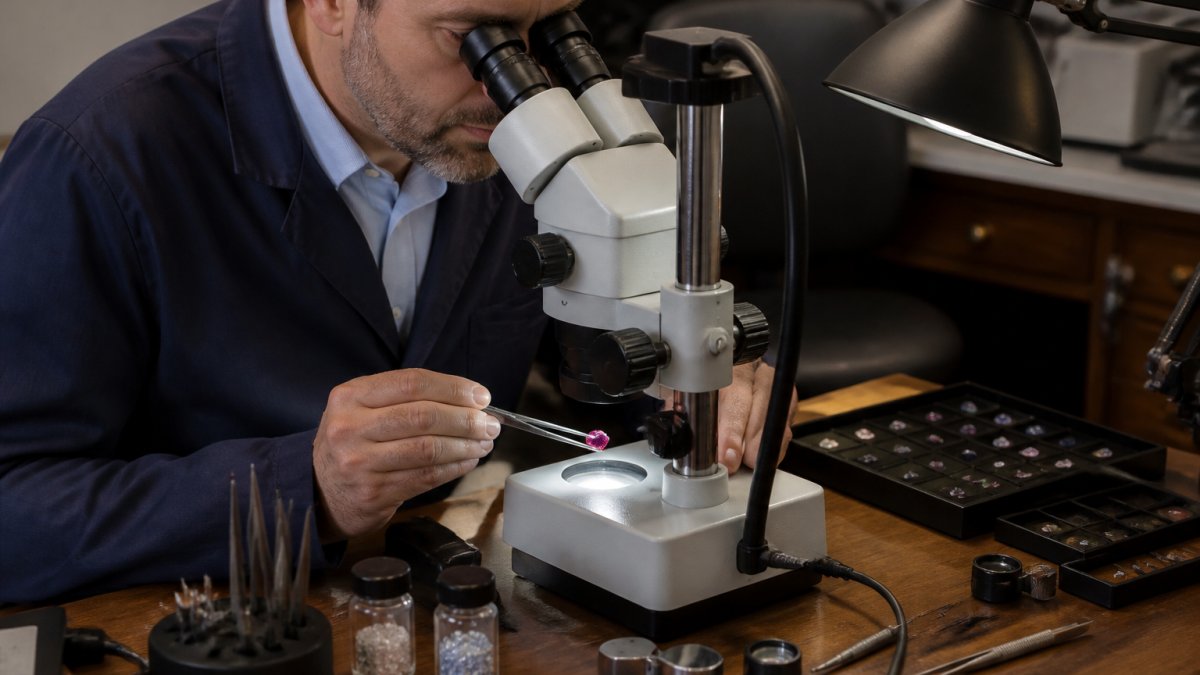
Microscopic Examination Techniques
A trained gemologist uses magnification to spot signs of laboratory origin. Natural gems show inclusion patterns that fingerprint their geological formation; lab-grown stones either lack these inclusions or display patterns inconsistent with natural growth.
Under magnification, natural rubies and sapphires reveal color zoning, areas where chromium concentration varies, creating banded patterns. Lab-grown stones show uniform color distribution because the growth environment is controlled.
Flux-melt and hydrothermal processes leave distinctive growth patterns visible under magnification, which a skilled gemologist recognizes immediately. This is why certification from reputable labs matters: they document exactly what they observe.
Gemological Testing Methods
Professional gemological laboratories use multiple testing approaches.
Thermal conductivity testing measures how quickly a gem conducts heat. Lab-grown sapphires often show values that differ from natural stones, revealing their synthetic origin.
Spectroscopy analyzes how light passes through the gem at different wavelengths; each growth method leaves a signature. The GIA (Gemological Institute of America) and similar organizations use these techniques to issue definitive origin reports that back up a certified natural gemstone.
Natural vs Lab-Grown Gemstone Value and Investment Potential
Price and long-term value diverge sharply between natural and lab-grown gems.
Natural colored gemstones command premium prices because they're rare and finite; a high-quality natural ruby or emerald becomes rarer as supplies diminish. Lab-grown gems can be produced in unlimited quantities, and this difference in scarcity drives the resale market.
A natural emerald from Certified Fine Jewelry, like our Natural Emerald Diamond Ring, retains and appreciates value because natural emeralds are becoming scarcer. The stone's certification documents its natural origin, which is precisely what collectors and future buyers value.

Long-Term Durability and Daily Wear Performance
Natural and lab-grown gems perform identically under daily wear. Both rank the same on the Mohs hardness scale, and a natural ruby and lab-grown ruby scratch and break at the same resistance level because the crystalline structure is chemically identical.
What differs is market perception. Collectors view natural gems as heirloom pieces because they've survived geological processes and carry a sense of permanence.
In practice, both types last indefinitely if properly cared for. But the natural stone will likely remain valuable to future owners, while the lab-grown version may become a curiosity with uncertain resale appeal.
Resale Value and Market Liquidity
This is where natural gemstones win decisively. Natural colored gems appreciate or hold value over decades. Lab-grown gems depreciate immediately and significantly.
A natural ruby purchased for $5,000 today might resell for $4,500 in five years if the market softens, but could resell for $6,500 if ruby supplies tighten.
Jewelry retailers and auction houses actively trade natural colored gemstones, while lab-grown gems have minimal secondary market.
This resale reality shapes how collectors approach purchases. A natural gemstone is an investment you can wear. A lab-grown gemstone is a purchase you'll keep because resale options are limited.
Ethical Sourcing of Colored Gemstones
The ethics of gemstone sourcing matter increasingly to discerning buyers. Natural gems raise questions about mining practices and environmental impact; lab-grown gems sidestep mining but raise their own questions about energy consumption and transparency.
Mining Practices and Environmental Impact
Natural gemstone mining has a genuine environmental footprint. Large-scale operations disturb ecosystems, consume water, and generate waste, and some regions operate with minimal oversight, creating serious ecological damage.
However, ethical mining exists.
Lab-grown gems eliminate mining entirely, which sounds cleaner, but they require significant energy, hydrothermal and flux-melt processes consume electricity continuously over weeks.
Natural Emerald Diamond Ring Size 6.5 14k White Gold 2.16 TCW Certified $4,950 →
At Certified Fine Jewelry, we source natural gemstones with documented ethical origins. Our four-generation legacy in Brooklyn means we've built relationships with suppliers who meet strict ethical standards.
Conflict-Free and Certified Origins
Natural gemstones can be certified as conflict-free, meaning they weren't mined in war zones or used to finance armed conflict. This certification exists because some gemstone-producing regions have histories of conflict-linked mining.
Certified natural gemstones come with origin reports. The GIA and similar organizations document where the stone was mined and confirm it's conflict-free, which matters for buyers who want full transparency about their purchase's impact.
Gemstone Certification and Origin Reports
Certification transforms a gemstone from an unknown object into a documented asset. Understanding what certification means, and what it doesn't, protects your investment.
GIA Standards and Appraisal Documentation
The Gemological Institute of America (GIA) sets the standard for gemstone grading and origin certification. A GIA report documents color, clarity, carat weight, cut quality, and origin (natural or lab-grown).
GIA certification doesn't guarantee value, it documents facts. A certified natural ruby is worth more than a certified lab-grown ruby of identical quality because natural rubies are rarer. The certification simply confirms which is which.

Every piece from Certified Fine Jewelry arrives with GIA certification or equivalent documentation from Gemological Appraisal Laboratory, which is a proud member of the GIA Alumni Association and maintains GIA standards.
Insurance and Appraisal Considerations
Certified gemstones are insurable at their appraised value. Insurance companies require documentation of quality and origin before issuing coverage. Without certification, you'll struggle to insure a high-value gemstone.
Appraisals establish replacement value for insurance purposes. A certified natural gemstone has a documented appraisal value. If your piece is lost or damaged, insurance covers the replacement cost based on that appraisal.
Lab-grown gems present an appraisal challenge.
This appraisal reality is another practical reason natural gemstones make better heirloom pieces: they have established market values and insurance coverage, while lab-grown gems lack this infrastructure.
Comparing Specific Gemstone Types
Different gemstone families behave differently when comparing natural versus lab-grown options. Understanding these distinctions helps you evaluate specific stones.
Rubies and Sapphires (Corundum Family)
Rubies and sapphires are both corundum, aluminum oxide with trace elements creating color. Red corundum is ruby; all other colors are sapphire.
Natural rubies command extraordinary prices because fine specimens are exceptionally rare, a high-quality natural ruby costs more per carat than a diamond. Lab-grown rubies cost a fraction because supply is unlimited.
Our Natural Ruby Ring exemplifies the investment case for natural corundum. A 4.51 carat natural ruby certified and appraised at $2,950 represents genuine rarity and lasting value.
Sapphires follow the same pattern: natural sapphires appreciate over time, while lab-grown versions depreciate. Our Natural Sapphire Diamond Stud Earrings showcase natural white sapphires valued for their natural origin and documented rarity.

Emeralds and Other Beryl Varieties
Emeralds are beryl with chromium and vanadium creating the green color. This family is where natural versus lab-grown differences become most apparent visually.
Natural emeralds almost always contain visible inclusions, the "jardin" or garden effect that collectors value as proof of natural origin. Lab-grown emeralds can be created with fewer inclusions, making them appear cleaner and more perfect.
This perfection is a red flag for emeralds: a flawless emerald is suspicious and likely lab-grown.
Our Natural Emerald Diamond Ring features a natural emerald with semi-transparent clarity and moderate saturation, exactly the characteristics that signal natural origin.
Which Should You Choose for Your Jewelry?
The choice between natural and lab-grown gemstones depends on your priorities and timeline.
Choose natural gemstones if you want an investment piece that appreciates or holds value, plan to pass the jewelry to future generations, want documented ethical sourcing and transparent origin, or want genuine rarity that becomes more valuable as supplies diminish.
For most discerning buyers seeking heirloom-quality pieces, natural gemstones are the clear choice. The investment case is compelling: natural gems retain and appreciate value over decades, while lab-grown gems depreciate immediately. The rarity is genuine. The ethical sourcing can be documented.
The gemstone you choose today becomes the story you tell tomorrow. When you choose natural gemstones from Certified Fine Jewelry, you're investing in rarity, authenticity, and a legacy you can pass forward. Shop now and discover the difference that natural gemstones and artisanal craftsmanship make.
Frequently Asked Questions
What is the main difference between natural and lab-grown colored gemstones?
Natural colored gemstones form over millions of years beneath the earth's surface through geological processes, developing unique inclusions and trace elements that give them character. Lab-grown gemstones are created in controlled environments using hydrothermal or flux-melt methods that replicate natural conditions in weeks or months. While chemically identical, natural stones possess a crystalline structure shaped by geological forces, whereas lab-created stones show growth patterns typical of their creation method. Both can be beautiful, but natural stones carry the story of Earth's processes.
How can you verify whether a colored gemstone is natural or lab-grown?
Professional gemological certification is the most reliable method. Gemologists use specialized equipment including microscopes, spectroscopes, and thermal conductivity testers to examine inclusions, growth patterns, and optical properties. Natural gemstones often contain distinctive inclusions and display pleochroism (color shift from different angles), while lab-grown stones typically show fewer or different inclusions and more uniform color. Certified gemological laboratories like GIA provide detailed origin reports documenting whether a stone is natural or lab-created. Always request a certificate of authenticity and appraisal from a qualified gemological lab.
Do natural colored gemstones hold their value better than lab-grown stones?
Natural colored gemstones generally retain value better, particularly rare varieties like fine rubies and emeralds. Market demand for natural stones remains strong among collectors and those seeking heirloom pieces, supporting resale value. Lab-grown gemstones, while chemically identical, typically depreciate more significantly because supply is unlimited and they lack the rarity factor. For investment purposes, natural stones certified by reputable gemological laboratories offer greater long-term liquidity. However, both types can be durable and beautiful for personal enjoyment; value retention matters most if you plan to resell.
Are lab-grown gemstones more ethical than natural gemstones?
Lab-grown gemstones eliminate mining-related environmental disruption and avoid concerns about conflict-zone sourcing. However, natural gemstones from ethically certified sources with responsible mining practices are equally ethical. The key is certification and documentation. Reputable jewelers provide gemological certificates confirming origin and ethical sourcing standards. At Certified Fine Jewelry, many natural gemstones come with certification and appraisal, ensuring transparency about sourcing and authenticity. Choose based on your values: lab-grown for minimal environmental impact, or ethically sourced natural stones for rarity and proven certification of responsible practices.
What gemstones are available in both natural and lab-grown versions?
Rubies, sapphires, and emeralds are the most commonly available in both forms. Rubies and sapphires (both corundum) are frequently lab-created due to high natural prices. Emeralds (beryl family) are also produced in laboratories, though natural emeralds remain highly valued. Other gemstones like citrine and opal can be lab-created, but availability varies. When shopping for colored gemstones, always verify through certification whether you're purchasing natural or lab-grown. Certified Fine Jewelry specializes in natural gemstones with gemological certification, ensuring you know exactly what you're acquiring.