

Handcrafted vs Mass-Produced Jewelry: Quality Compared
Table of Contents
- Handcrafted Versus Mass-Produced Jewelry: Key Differences
- How to Tell if Jewelry Is Well Made
- Handmade vs Machine-Made Jewelry: Construction Methods
- Materials, Metal Quality, and Durability
- Handmade Jewelry Durability: What the Evidence Shows
- Is Handmade Jewelry Worth It? Cost Versus Value
- Uniqueness, Consistency, and Individual Variation
- Frequently Asked Questions
Last Updated: October 11, 2026
Handcrafted Versus Mass-Produced Jewelry: Key Differences
The differences between handcrafted vs mass-produced jewelry span construction method, materials, and durability. At Certified Fine Jewelry, we work exclusively with handcrafted pieces designed and made by hand in Brooklyn.
Handcrafted jewelry is made by artisans who design and construct each piece individually. Mass-produced jewelry uses machines and standardized molds to create identical copies at scale. These methods produce different quality levels, durability profiles, and resale values.
Handmade pieces are one-of-a-kind; mass-produced pieces are identical copies. But uniqueness alone doesn't justify the price premium. What matters is construction quality, material choices, and attention to detail.
This guide covers inspection techniques, material specifications, durability evidence, and cost-benefit analysis to help you make an informed choice.
How to Tell if Jewelry Is Well Made
Evaluate jewelry quality through hands-on inspection. Look for smooth metal edges, secure stone settings, consistent finishing, and proper weight, measurable indicators of construction quality.
Inspection Checklist for Quality Assessment
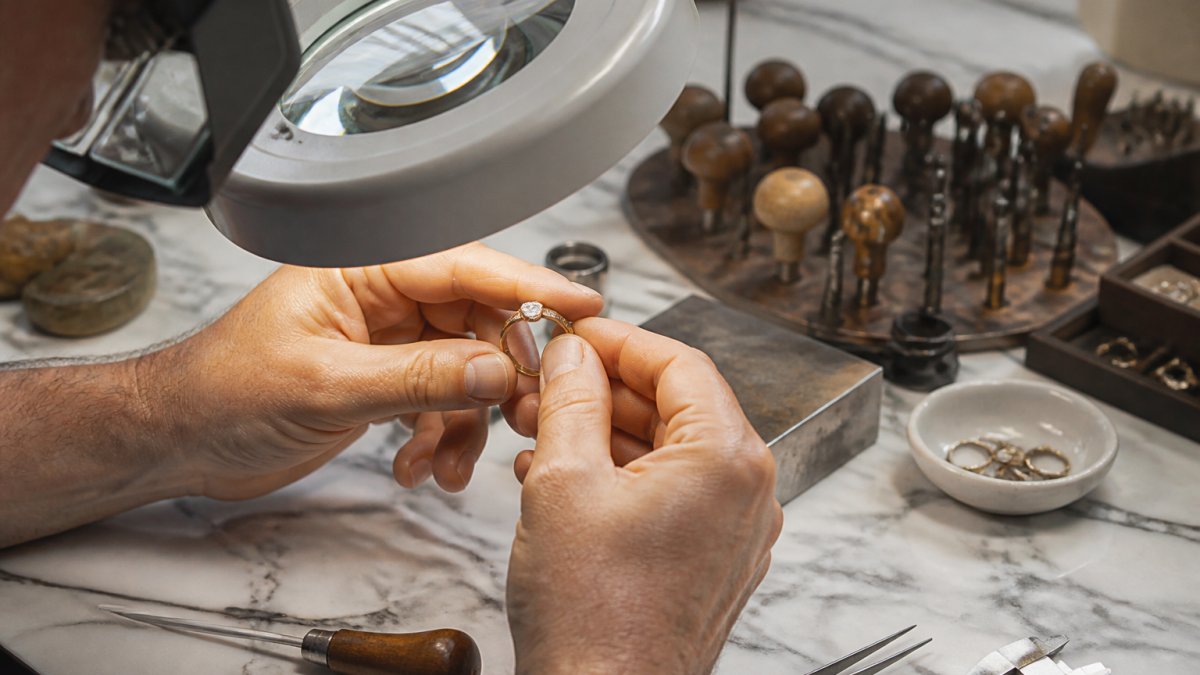
Use this checklist when evaluating any piece:
- Metal edges and surfaces: Run your finger along edges. Are they smooth or rough? Handcrafted pieces have polished, finished edges. Mass-produced pieces often have sharp or uneven edges from mold seams.
- Stone settings: Look at how stones are secured. In quality work, the metal bezel or prongs fit snugly with no visible gaps. Loose settings indicate rushed assembly.
- Hallmarks and stamps: Check for metal purity marks (14K, 18K, 925 for silver). Legitimate pieces are stamped. Missing hallmarks suggest lower quality or misrepresented materials.
- Weight and density: Hold the piece. Does it feel substantial? Quality metals (14K gold, sterling silver) have appropriate heft. Lightweight pieces often contain fillers or lower-grade alloys.
- Finishing consistency: Examine the polish and texture. Are they uniform across the piece, or do you see inconsistencies? Handcrafted work shows consistent attention. Factory pieces sometimes show variations from assembly-line speed.
- Clasp and closure mechanisms: Open and close any clasps. Do they operate smoothly? Quality clasps are engineered for durability. Flimsy clasps break quickly and are expensive to replace.
- Solder joints: Look where metal pieces connect. Are the joints smooth and invisible, or visible and rough? Clean joints indicate skilled metalwork.
The pieces Certified Fine Jewelry carries, like the Mikimoto Sterling Silver Pin with 5 Akoya Cultured Pearls, show all these markers. The sterling silver is hallmarked, the pearls are securely set, and the weight reflects genuine material quality.

Handmade vs Machine-Made Jewelry: Construction Methods
Construction method influences quality but doesn't determine it. A piece can be handmade and poorly executed, or mass-produced and well-engineered. What matters is how the method is applied, materials chosen, and quality controls in place.
Hand-Forging and Artisan Techniques
Hand-forging heats precious metal and shapes it using hammers, anvils, and specialized tools, creating denser metal structures than casting. The metalsmith controls temperature, pressure, and timing with precision.
Artisan techniques include hand-finishing: polishing, texturing, and edge work. Each piece gets individual attention, and artisans can modify pieces without compromising integrity.
Hand-forging quality depends on artisan skill and discipline. Hand-forging is only superior when executed with care and expertise.
Hand-forging is slow and expensive, which is why handcrafted pieces cost more.
Machine Production and Casting: Quality Variation
Mass-produced jewelry uses casting (pouring molten metal into molds) followed by machine finishing. A single mold produces hundreds of identical pieces on assembly lines.
Precision casting with vacuum or centrifugal techniques can produce durable pieces, but requires expensive equipment and careful process control.
Lower-price mass-produced jewelry uses standard casting with minimal oversight. While consistent, standard-cast pieces often have internal voids or weak spots. Standardized finishing can't accommodate individual variations in metal or stone quality.
Machine finishing produces uniform results when properly calibrated, but speed-prioritized manufacturing shows visible tool marks, uneven polishing, or sharp edges.
The Real Quality Determinants: Material and Oversight
Three factors matter more than production method:
-
Material specification: 14K or 18K gold, genuine sterling silver, and legitimate gemstones indicate quality regardless of handmade or machine-made origin.

Vintage John Hardy 18K Gold Purple Amethyst Jaisalmer Clip On Earrings 925 JH124 -
Process control: Rigorous inspection of defects, solder joints, stone settings, and metal thickness separates quality makers from those shipping without verification.
-
Repairability and accountability: Handcrafted jewelers typically stand behind their work.
Hybrid and Emerging Methods
Modern production blends methods: machine-cast pieces hand-finished by artisans, or hand-designed pieces produced via CNC machining then hand-polished. The key question is not "handmade or machine-made?" but "What quality standards were applied, and can I verify them?"
Materials, Metal Quality, and Durability
Materials determine durability, where handcrafted vs mass-produced jewelry diverges most sharply.
Precious Metals and Alloy Composition
Quality jewelry uses precious metals: 14K or 18K gold, platinum, or 925 sterling silver. 18K gold is 75% pure; 14K is 58.3% pure. Both are suitable for fine jewelry.
Mass-produced jewelry sometimes uses 10K gold, plated gold, or filled gold. These cost less upfront but deteriorate faster. Gold plating wears off within 1-3 years; filled gold lasts longer but still degrades.
Mass-produced sterling silver is sometimes alloyed with nickel to reduce cost, causing allergic reactions and faster tarnishing.
Handcrafted pieces use genuine precious metals because artisans' reputations depend on quality. A handcrafted piece in 14K gold retains value and wearability for decades.

Gemstone Selection and Setting Stability
Gemstones matter as much as metal. Quality pieces use genuine stones; mass-produced jewelry often uses synthetic or low-grade stones.
Setting stability is critical. Handcrafted work involves individual stone evaluation and custom-fitted settings, examining each stone for flaws, color, and clarity before setting.
Mikimoto Estate Akoya Pearl Brooch Pin 14k Gold 6 mm M273 →
The Vintage John Hardy 18K Gold Purple Amethyst Jaisalmer Clip On Earrings exemplify this approach: natural amethyst stones are individually evaluated, then set in 18K gold bezels with precision. The result is a piece that maintains its beauty and structural integrity through regular wear.
Mass-produced pieces use standardized settings. Slight variations in stone size or shape result in loose or overly tight settings, leading to lost stones over time.
Handmade Jewelry Durability: What the Evidence Shows
A well-made handcrafted piece can be worn daily for 50+ years. Handcrafted pieces have stronger joints, denser metal, and more secure stone settings that compound over time.
Handcrafted jewelry is repairable, a skilled jeweler can fix loose stones or broken clasps without compromising integrity.
The real cost of mass-produced jewelry emerges over time. Total cost of ownership favors handcrafted work.
Is Handmade Jewelry Worth It? Cost Versus Value
Handcrafted jewelry costs more upfront, but the answer to whether it's justified emerges from total cost of ownership over the piece's lifetime.
Purchase Price Versus Total Cost of Ownership
A handcrafted engagement ring costs $3,000-$8,000.
Repair and maintenance costs reveal the real difference:
- Clasp replacement: Mass-produced: $150-$300 (often impossible if glued). Handcrafted: $75-$150.
- Stone resetting: Mass-produced: $200-$500. Handcrafted: $50-$150.
- Plating renewal: Mass-produced gold-plated jewelry needs replating every 1-3 years ($75-$200). Handcrafted solid gold never needs replating.
- Resizing: Handcrafted rings resize easily ($50-$150). Mass-produced rings with glued components may not resize.
- Polishing: Handcrafted pieces refinish indefinitely ($30-$100). Mass-produced pieces with thin plating cannot refinish without exposing base metal.
Replacement cost: If a mass-produced piece fails beyond repair, you replace it. If a handcrafted piece fails, you repair it. Over 20 years, a mass-produced piece might require 2-3 replacements. A handcrafted piece requires 0-1 repair.
Total Cost of Ownership Example
Consider a sterling silver bracelet:
Mass-produced bracelet:
- Purchase price: $150
- Clasp replacement (year 3): $200
- Replating (year 2, 4, 6): $75 × 3 = $225
- Replacement due to metal fatigue (year 8): $150
- Total over 10 years: $725
Handcrafted bracelet:
- Purchase price: $400
- Clasp replacement (year 7): $100
- Professional polishing (year 5, 10): $50 × 2 = $100
- Total over 10 years: $600
The handcrafted piece costs less over time, despite the higher upfront price.
Craftsmanship and Personalization Premium
Handcrafted jewelry commands a premium because of the labor involved. A skilled artisan might spend 20+ hours on a single piece. That time costs money. But you're also paying for something tangible: the maker's expertise, the piece's individual character, and the ability to modify or repair it.
Personalization is another factor. Many handcrafted jewelers will modify designs or create custom pieces. If you want a specific stone, metal combination, or design element, a handcrafted jeweler can accommodate it. Custom work typically adds 20-40% to the base price, but it ensures the piece matches your exact vision.
Long-Term Ownership and Resale Value
Handcrafted pieces hold value. A well-made piece in precious metals can be resold, often for 40-60% of the original purchase price. Some vintage handcrafted pieces appreciate in value, especially if they're from recognized makers or have historical significance.
Mass-produced jewelry depreciates rapidly. Resale value is typically 10-20% of the original price.
If you ever need to sell, whether due to changing preferences or financial need, handcrafted jewelry provides an exit strategy. A $5,000 handcrafted piece might resell for $2,000-$3,000. The handcrafted piece is a better financial hedge.
When Mass-Produced Makes Sense
Handcrafted is not always the right choice. If you plan to wear jewelry for one season and move on, or if you're experimenting with a style you might not keep, mass-produced is appropriate. If you want a piece that becomes an heirloom or that you'll wear for decades, handcrafted is a strong choice from a cost-of-ownership perspective.
Uniqueness, Consistency, and Individual Variation
There's tension here worth understanding. Handcrafted jewelry is unique, but that uniqueness comes with natural variation. No two handmade pieces are exactly identical. Some buyers love this. Others find it unsettling.
Mass-produced jewelry is perfectly consistent. Every piece is identical to the last. If you want absolute uniformity, factory production delivers it.
The variation in handcrafted work isn't a flaw, it's evidence of the maker's hand. Slight differences in finish, subtle variations in stone placement, individual flourishes in design, these are what make a handcrafted piece feel alive.
For buyers seeking one-of-a-kind pieces that express personal style, handcrafted is the obvious choice. For buyers who value predictability and uniformity, mass-produced works. There's no right answer; it depends on what you value.
Choosing between handcrafted and mass-produced jewelry ultimately comes down to your priorities. If you want jewelry that lasts decades, holds value, and tells a story, handcrafted work from a skilled artisan is the investment. Certified Fine Jewelry specializes in exactly this, handcrafted pieces designed and made by hand in Brooklyn using ethically sourced gemstones and precious metals. Our pieces like the Mikimoto Estate Akoya Pearl Brooch Pin 14k Gold exemplify the durability, craftsmanship, and individual character that define true fine jewelry. Shop now and discover pieces designed to become heirlooms.
Frequently Asked Questions
Is handcrafted jewelry better quality than mass-produced jewelry?
Handcrafted jewelry typically offers superior attention to detail, with artisans controlling every step of construction and finishing. However, quality depends on the maker's skill and materials used. Handcrafted pieces often excel in customization, uniqueness, and structural integrity.
How can you tell if jewelry is well made?
Examine the metal edges for smooth finishing and proper polishing. Check stone settings for secure bezels and stable prongs with no visible gaps. Look for hallmarks indicating metal purity (14K, 18K, 925 for silver). Inspect solder joints for clean, even application. Feel the weight and balance, quality pieces feel substantial. Ask about the maker's credentials and whether repairs are offered. Certified Fine Jewelry pieces, for example, feature hand-set stones and meticulous finishing that reflect generations of craftsmanship.
Does handmade jewelry last longer than mass-produced jewelry?
Handmade jewelry can last longer when crafted by skilled artisans using quality materials and proper construction techniques. Durability ultimately depends on material quality, construction method, and maintenance, not production method alone. Handcrafted pieces designed for daily wear, like those in precious metals with secure stone settings, typically outperform mass-produced fashion jewelry.
Is handcrafted jewelry worth the higher price?
Handcrafted jewelry justifies higher prices through superior craftsmanship, ethical sourcing, personalization, and longevity. You're paying for the maker's expertise, custom design, and accountability for quality. Unlike mass-produced alternatives, each handcrafted piece is unique and often designed to last generations. For significant life milestones or heirloom-quality pieces, the investment yields lasting value and emotional significance. However, if you need affordable, on-trend pieces for occasional wear, mass-produced options may be more practical. Consider your intended use and whether you value uniqueness and durability over cost.